A 30-day self-tracking system
Why is your anxiety worse in the morning? Find out in 7 days.
Months of 5 a.m. dread and 1 a.m. overthinking, and still no idea what sets it off. This guide helps you track the pattern, find your triggers, and follow a simple routine for both ends of the day.
$17 one-time. Instant PDF download.
- 34 pages
- 9 printable worksheets
- 30-day plan
- Instant download
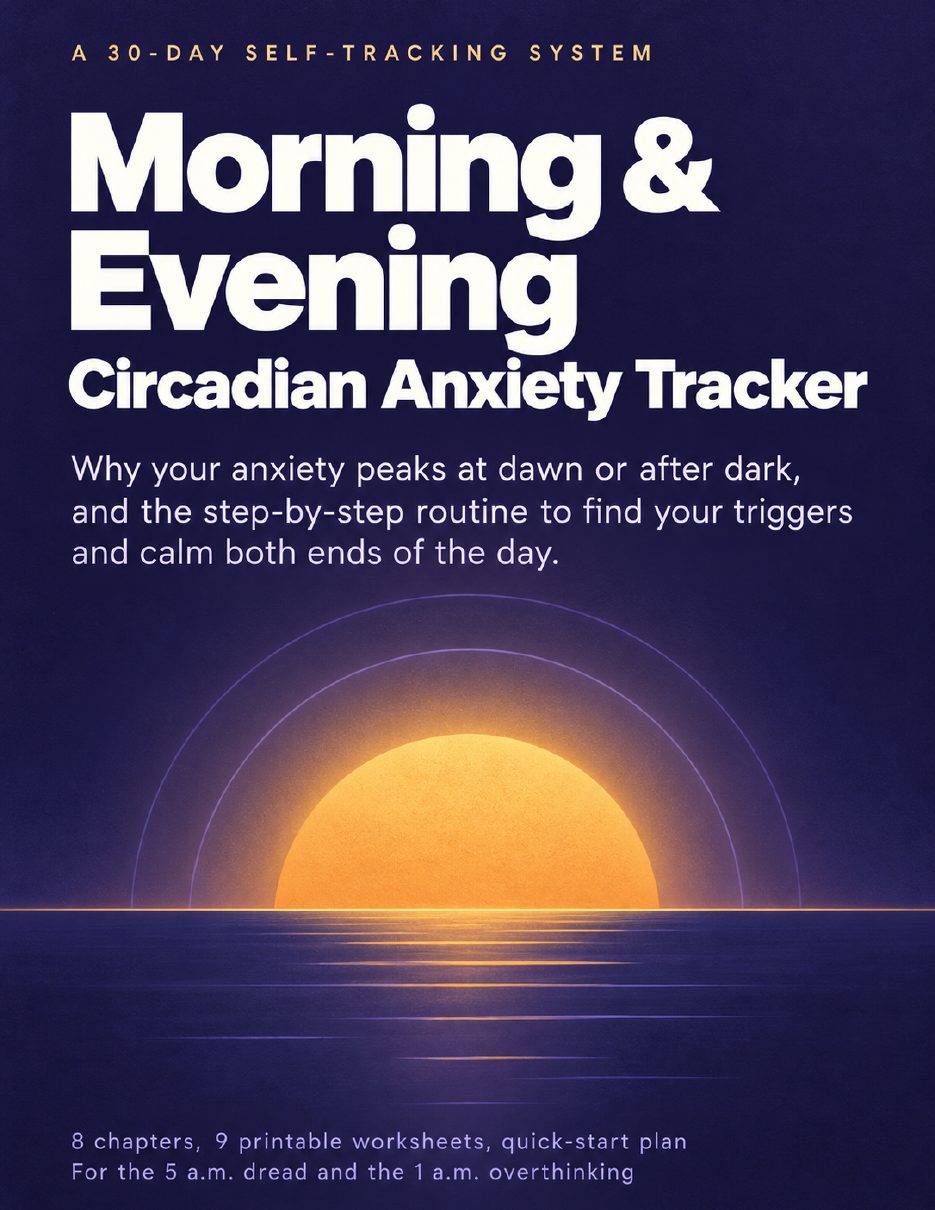
5:40 a.m. Heart pounding. Nothing has happened yet.
3:07 a.m. Same loop. Same conversation from Tuesday.
Every day, the same guessing: is it sleep, caffeine, the news, or something else?
Anxiety often follows a daily rhythm. Most people never get to see their own.
Why mornings and nights can feel so different
Mornings
- A natural cortisol rise in the first 30 to 45 minutes after waking (normal, but it can feel like dread)
- Sleep inertia: a groggy brain with loud emotions
- Your brain previews the whole day in seconds
- An empty stomach, strong coffee and the phone in your first minutes
Nights
- Quiet removes distraction, so worry gets the stage
- A tired brain is worse at calming itself down
- Unfinished tasks and conversations keep nagging
- Bed can become a worry cue, and trying to sleep adds pressure
You cannot feel cortisol, and research linking it to anxiety is mixed. This guide focuses on what you can observe and change: sleep, habits, thoughts and triggers.
A simple system, in four moves
- 1
Track
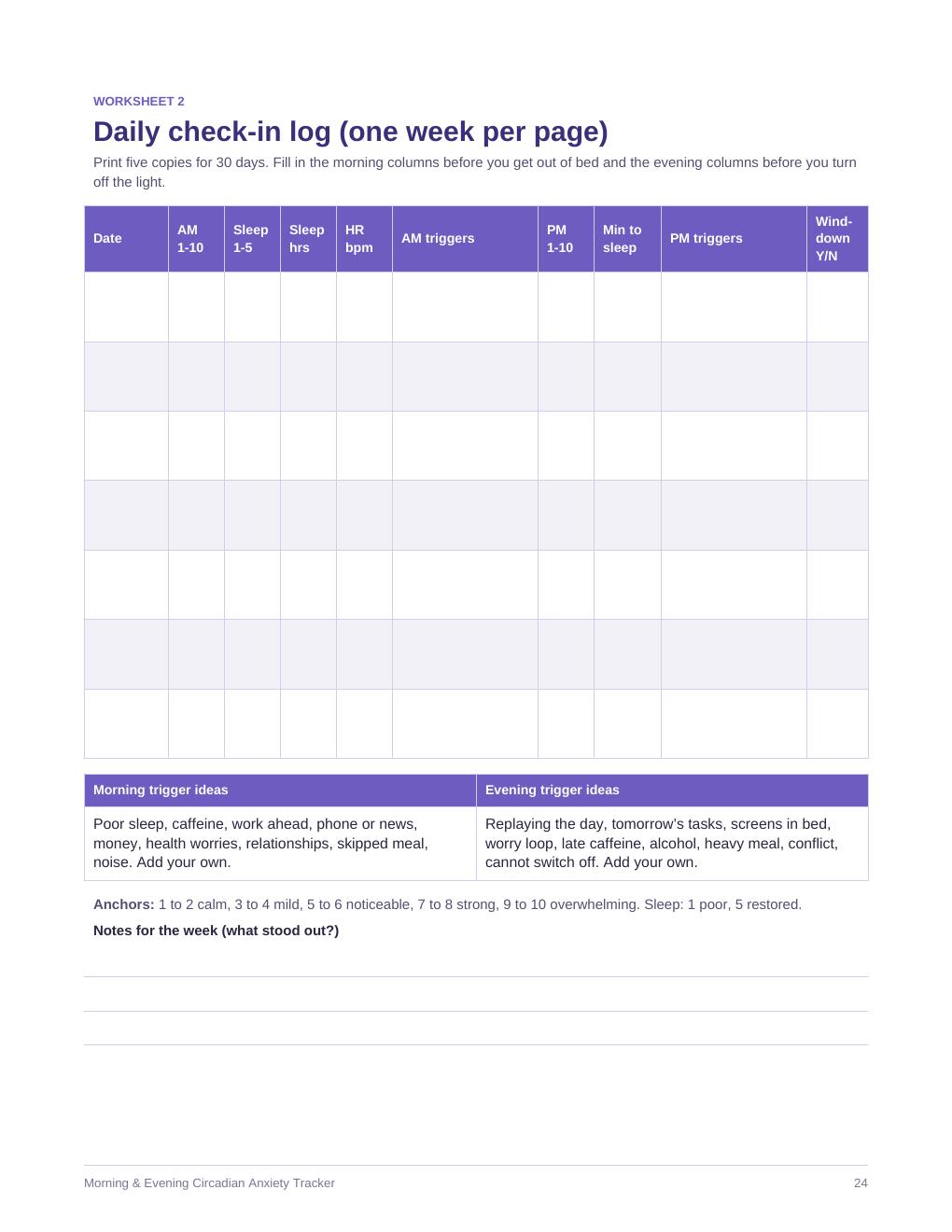
Two 60-second check-ins a day: anxiety, sleep, resting heart rate and triggers.
- 2
Find your triggers
A 10-minute weekly review shows what lifts your mornings and nights.
- 3
Calm the morning
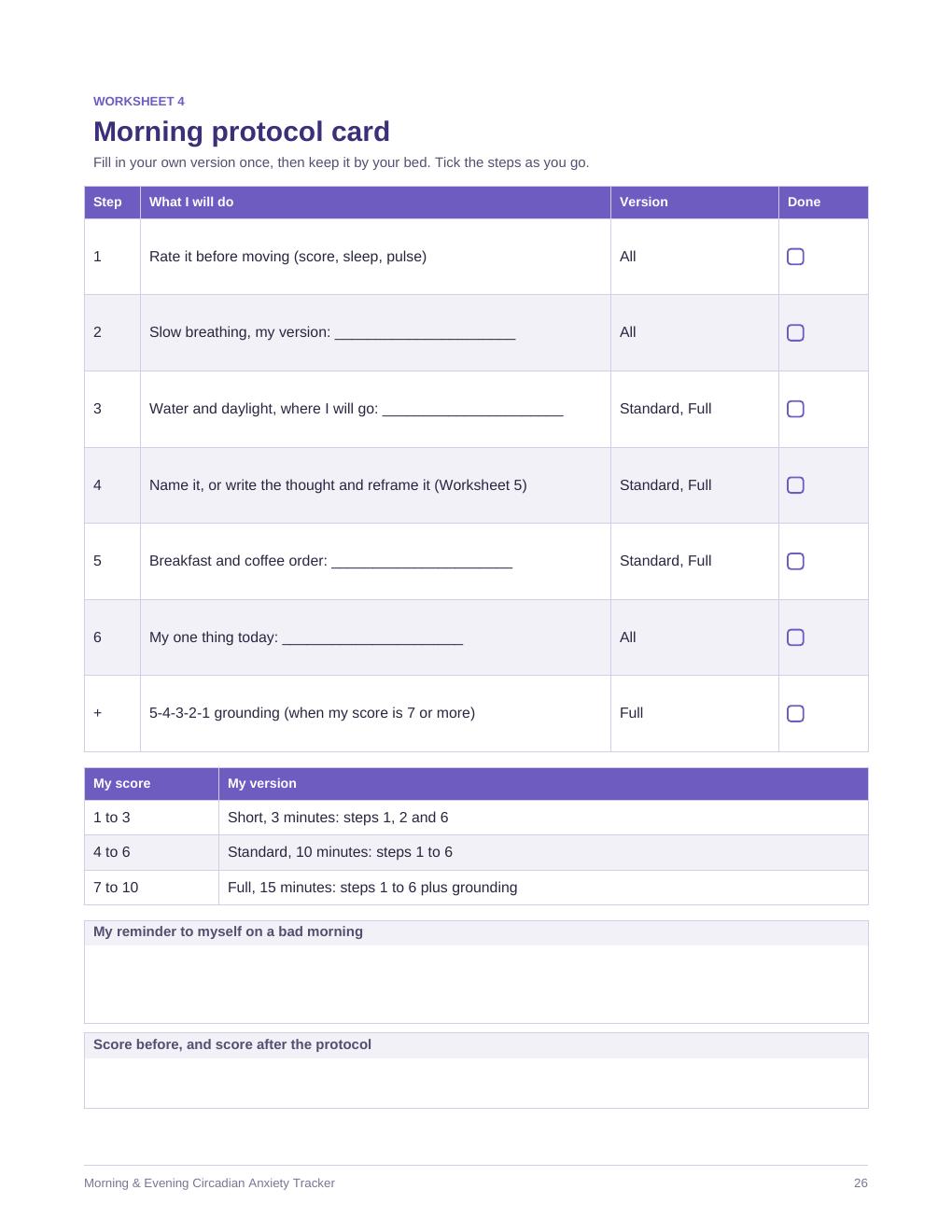
A 3 to 15 minute morning protocol that calms your body first, then your thoughts.
- 4
Close the night
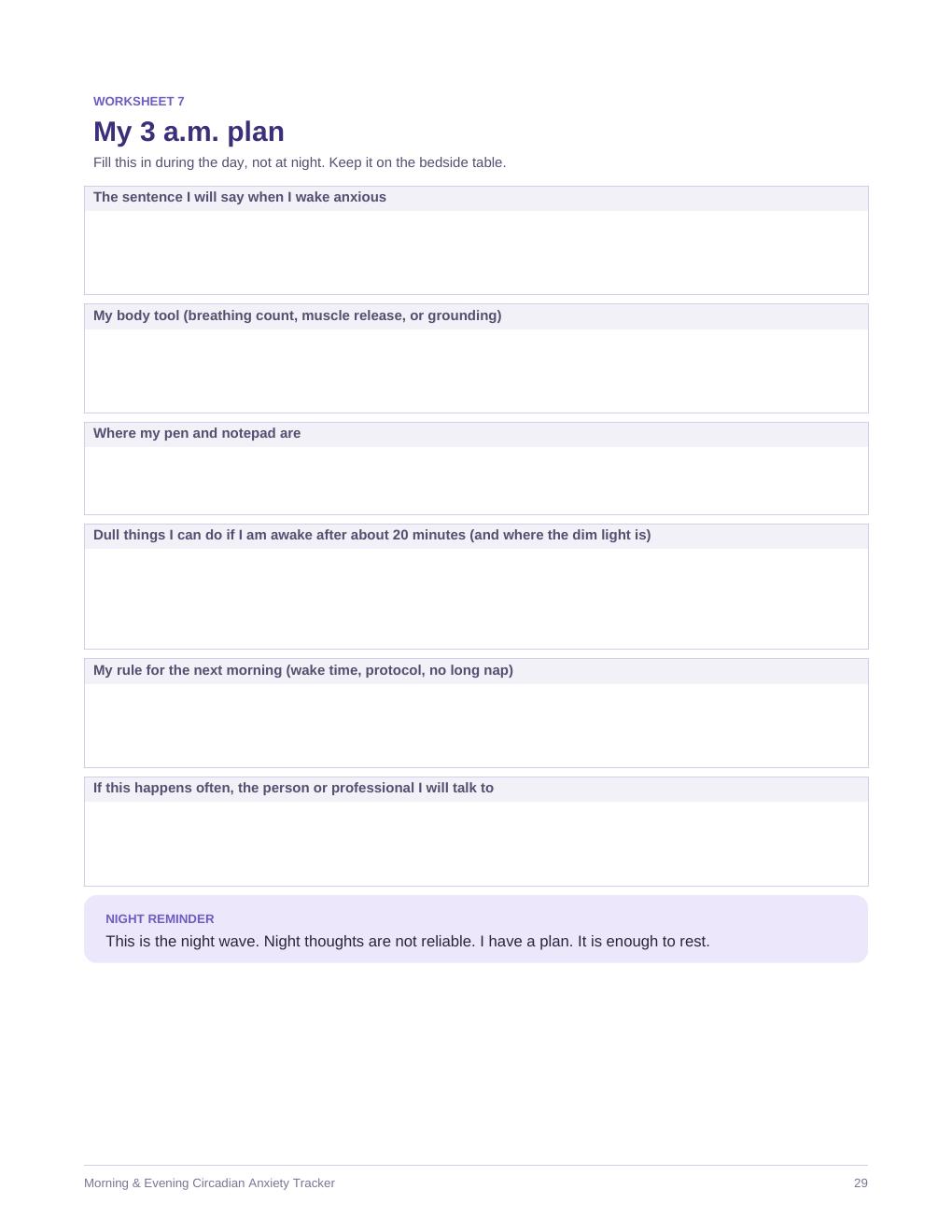
An evening wind-down, a worry window and a ready-made 3 a.m. plan.
What's inside the 34 pages
Each chapter: goal, step-by-step instructions, an example, and common mistakes to avoid.
Chapter 1
Why anxiety has a clock
The time-based drivers, plus a quick quiz to find your type (Dawn, Dusk or Both).
Chapter 2
Your 60-second check-ins
What to track and how to keep the habit.
Chapter 3
Trigger detective
The weekly review and trigger tally.
Chapter 4
The morning protocol
Six steps in short, standard and full versions.
Chapter 5
Rescue tools for a spike
5-4-3-2-1 grounding and a six-step thought reframe.
Chapter 6
The evening wind-down
Caffeine cut-off, worry window, tomorrow list.
Chapter 7
Your 3 a.m. plan
A script for night waking.
Chapter 8
Experiments and when to get help
One-week experiments and when to see a professional.
9 printable worksheets so you do not start from a blank page
- Baseline snapshot
- Daily check-in log
- Weekly review and trigger tally
- Morning protocol card
- Thought reframe
- Worry window and tomorrow list
- My 3 a.m. plan
- Experiment tracker
- 30-day summary and appointment sheet
Start tonight. Follow it for 30 days.
Week 1
Observe
Week 2
Build the morning
Week 3
Build the evening
Week 4
Experiment and review
Short on time? Begin with the 7-day quick start.
Who it is for
- People whose anxiety is worse in the morning, at night, or both
- Beginners who want clear steps, not theory
- Anyone who wants data to bring to a doctor or therapist
Who it is not for
- Anyone who needs urgent help. If you are in crisis or feel unsafe, contact your local emergency number or a crisis line
- Anyone looking for a diagnosis or a replacement for professional care
Get the Dawn & Dusk Morning Anxiety Guide
- 34-page PDF
- 9 printable worksheets
- 7-day quick start and 30-day plan
- Instant download, read on any device or print it
$17
$17 one-time. Instant PDF download.
Questions
The pattern is already there. Start tracking it today.
$17 one-time. Instant PDF download.